
Humbang Hasundutan, December 3, 2025 Ribaknews.id
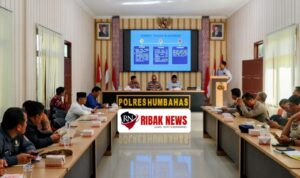
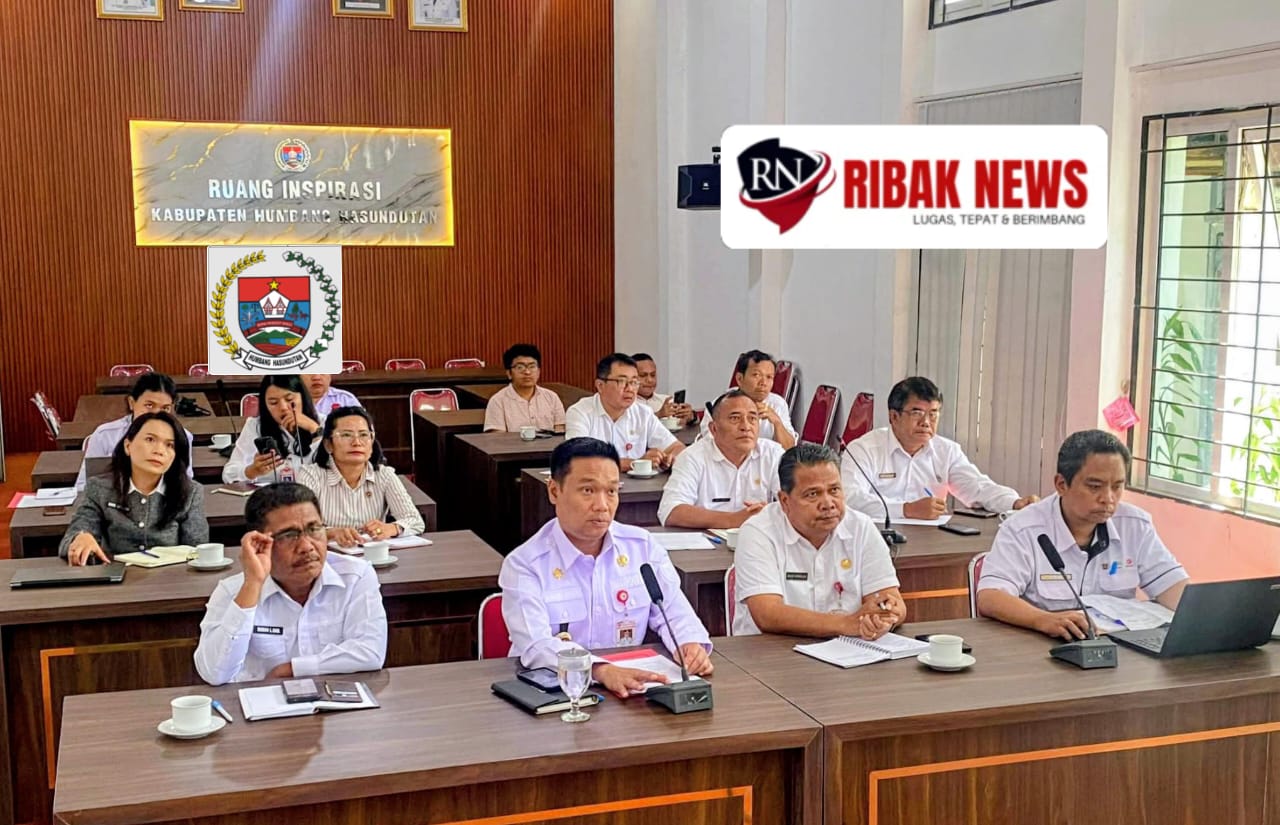
Regent Dr. Oloan Paniaran Nababan, SH., MH. participated in the Technical Coordination Meeting (Rakornis) for the preparation of the Field Visit on the Mapping and Digitalization Plan of the North Sumatra Food Estate (FE). The meeting was hosted by the Coordinating Ministry for Food Affairs of the Republic of Indonesia and conducted virtually via Zoom Meeting from the Inspiration Room, Humbang Hasundutan Regent’s Office, Doloksanggul, on Wednesday, 3 December 2025.
This coordination meeting serves as a strategic platform to finalize technical readiness ahead of the December 8–12, 2025 field visit, which will involve multiple ministries, national agencies, provincial representatives, and operational units from the local government.
Strengthening Spatial Mapping and Digital Integration
One of the key priorities discussed during the Rakornis was the refinement of spatial mapping and digital integration to support the national Food System Development Program. The central government emphasized the need for updated, standardized, and interoperable spatial datasets to ensure accurate land-use planning and policy formulation.
The technical agenda included:
Validation of village boundaries, farmer group territories, and existing Food Estate zones.
Harmonization of land-cover data, agricultural infrastructure, irrigation networks, and accessibility routes.
Preparation of digital datasets using national geospatial standards.
To support these requirements, the Humbang Hasundutan Government was requested to provide spatial data in formats such as GeoJSON, Shapefile, GeoTIFF, and thematic maps complemented with complete metadata to ensure compatibility with central systems.
FGD and Workshops: Aligning National and Local Priorities
The Rakornis also outlined plans for a Workshop and Focus Group Discussion (FGD) involving national and regional stakeholders during the field visit. These forums will serve as a collaborative platform to review strategic issues including land governance, partnership schemes with farmer groups, infrastructure reinforcement, and sustainable production models.
Regent Oloan Nababan highlighted the importance of synchronization in policy and implementation.
“Accurate mapping must go hand in hand with transparent policy dialogue. Our priority is ensuring that the Food Estate initiative directly benefits farmers and contributes to long-term community welfare,” he stated during the meeting.
Field Visit Preparation: Assessing Key Strategic Locations
The upcoming field visit will cover several strategic areas within the Food Estate region, including:
Core production zones and potential expansion areas.
Supporting infrastructure such as reservoirs, irrigation channels, and post-harvest facilities.
Demonstration plots and cluster-based commodity development areas.
The central government stressed the importance of preparing routes, logistics, accessibility assessments, and real-time field documentation to ensure that the inspection reflects actual on-ground conditions. Each OPD at the district level is expected to finalize its technical responsibilities before the visit.
Expected Outputs: Integrated Maps and a 90-Day Action Plan
The Rakornis concluded with the identification of specific outputs that must be delivered following the field visit, including:
1. Integrated thematic maps (digital and printed formats).
2. Technical verification reports summarizing field findings and recommendations.
3. FGD documentation, including minutes, identified issues, and institutional commitments.
4. A 30/60/90-day action plan aligning regional implementation with national priorities.
These outputs will serve as a foundation for further policy decisions, particularly regarding funding, infrastructure reinforcement, and farmer empowerment strategies in the Food Estate region.
Local Government Commitment to Multi-Level Collaboration
The Humbang Hasundutan Government reaffirmed its commitment to supporting this national strategic program. By harmonizing spatial data, coordinating field readiness, and strengthening inter-agency communication, the district aims to ensure that the Food Estate becomes a model for sustainable and integrated food security development.
“Effective collaboration between the central and regional governments is essential. While the region prepares data and field conditions, the central government provides policy support and technical guidance. With proper alignment, the Food Estate can become a national benchmark for agricultural transformation,” the Regent affirmed.
With the Rakornis completed, the district is entering its final preparation phase ahead of the comprehensive field visit scheduled for the second week of December.
Jonaer Silaban